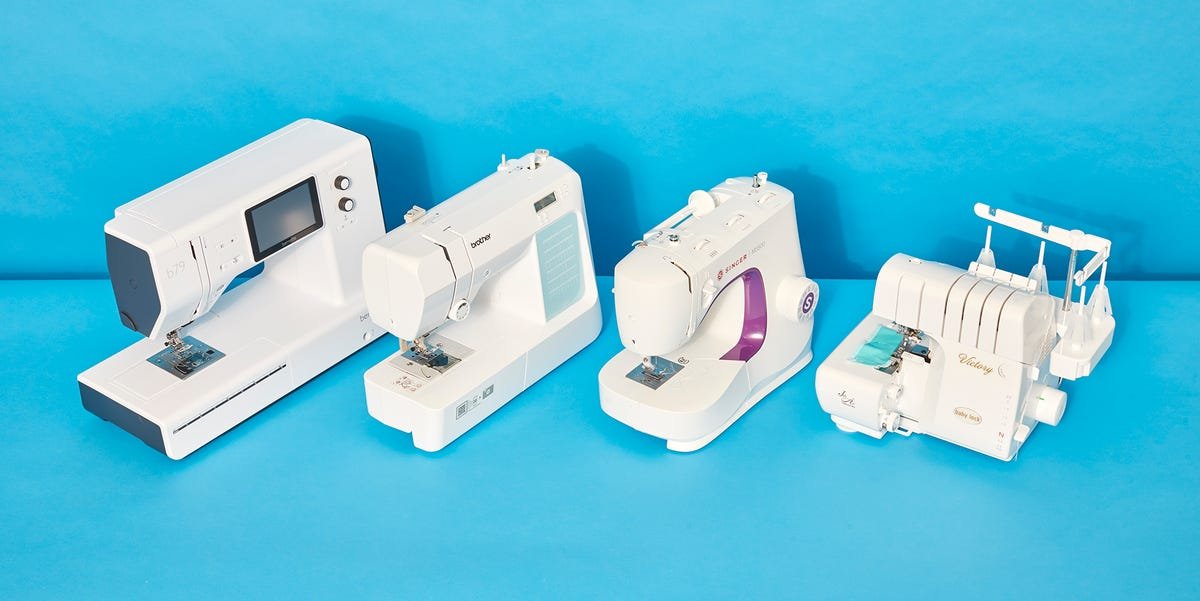
Are you ready to start your sewing journey in 2026 with a machine that actually makes crafting fun?
Choosing your first sewing machine is an investment in your creative future. With technology advancing, the best beginner models for 2025 and 2026 are smarter, more intuitive, and more durable than ever before. You don’t need a machine with hundreds of confusing stitches; you need a reliable partner that handles everything from basic mending to your first quilt with ease.
For this 2026 update, we compare established models from brands such as Singer and Brother using current manufacturer specifications, documented features and practical beginner use cases. The goal is to show what each machine is suited for, where it is limited and what to verify before buying.
Our top picks for the best sewing machines for beginners:
Best Value Sewing Machine for Beginners :KPCB Sewing Machine for Beginners with Finger Guard
Best Portable Sewing Machine for Beginners :SINGER M1000.662 Sewing Machine
For this update, we reviewed current manufacturer specifications, controls, threading and bobbin systems, included accessories, stitch options and the kinds of projects each machine is designed to handle. We do not claim hands-on testing where we did not perform it.
1.Best Overall Sewing Machine for Beginners
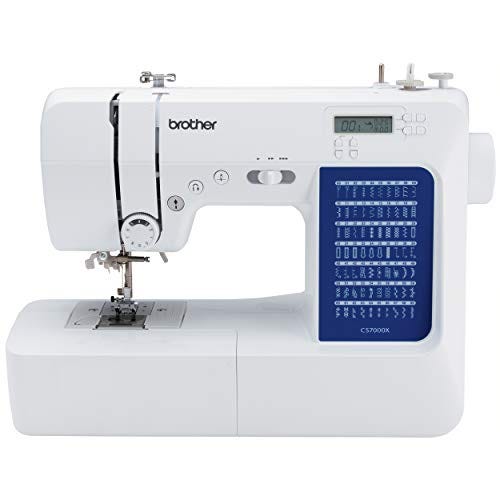
Brother CS7000X Computerized Sewing and Quilting Machine
Pros
- Drop-in bobbin
- Over 17,000 five-star Amazon reviews
- Simple threading directions with QR codes for additional guidance
Cons
- Showed some inaccuracies when sewing with polyester satin fabrics
If you’re a beginner sewer with plans to tackle more advanced projects in the future, this Brother sewing machine is an excellent choice. It comes with 10 presser feet and multiple bobbins to kickstart your sewing journey.
Brother documents a quick-set drop-in bobbin, automatic needle threading and adjustable speed controls on the CS7000X. Those features are useful for beginners because they reduce setup friction and make it easier to slow the machine down while learning curves, corners and seam control.
The CS7000X has 70 built-in stitches and seven buttonhole styles, giving a beginner plenty of room to move beyond straight seams into decorative work and light quilting. Fabric performance still depends on the correct needle, thread, presser foot and settings, so do not assume one setup will work equally well on every material.
| Machine type | Computerized |
|---|---|
| Weight | 14 pounds |
| Built-in stitches | 70 stitches with 7 buttonholes |
| Bobbin type | Drop-in |
2.Best Value Sewing Machine for Beginners
KPCB Sewing Machine for Beginners with Finger Guard

Pros
- Budget-friendly
- Lightweight
- Great for kids
Cons
- Limited for larger or advanced projects
- Better suited to light- and medium-weight fabrics
The SINGER M1000 is designed for basic mending, hems and straightforward sewing in a compact package. SINGER currently lists the machine at about 5.5 pounds, with a top drop-in bobbin, adjustable tension, free arm and simple dial-based stitch selection.
SINGER lists four built-in stitches and 32 stitch applications, plus a reverse lever for securing seams. The company positions the M1000 for light- to medium-weight fabrics and recommends a full-size machine for thicker fabrics or broader sewing needs. Its main advantage is portability and simplicity, not a large feature set.
| Machine type | Mechanical |
|---|---|
| Weight | Three pounds |
| Built-in stitches | 1 stitch |
| Bobbin type | Drop-in |
3.Best Portable Sewing Machine for Beginners
SINGER M1000.662 Sewing Machine

Pros
- Smallest machine from a durable brand
- Simple knobs and controls
- Easily portable and great for small spaces
Cons
- Some reviewers wish the included manual was more user friendly
The new SINGER sewing machine is their most compact model yet, measuring just 9.5″ x 11.5″ and weighing only 5.5 pounds, making it ideal for small spaces and easy portability. Our experts were impressed with its user-friendly controls, including an accessible backstitch and simple threading process, making it a great option for beginners. It comes with multiple bobbins, presser feet, and needles, providing everything you need to get started.
With over 4,900 positive reviews on Amazon, users praise it as “perfect for beginners” and an “excellent investment.” Some reviewers noted that the manual could be more detailed, but they found the brand’s online resources to be more helpful. This SINGER machine offers both simplicity and quality, making it a standout choice for new sewers.
| Machine type | Mechanical |
|---|---|
| Weight | 5.5 pounds |
| Number of stitches | 32 stitches |
| Bobbin type | Drop-in |
4.Easiest to Thread Sewing Machine for Beginners
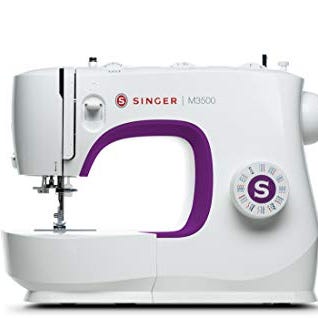
SINGER M3500 Sewing Machine
Pros
- Thousands of rave Amazon reviews
- Easily portable small size
- Automatic needle threader
Cons
- Mechanical controls offer fewer convenience features than computerized models
This Singer model is a better fit for beginners who prefer straightforward mechanical controls over menus and screens. When comparing mechanical machines, focus on stitch selection, reverse sewing, buttonhole workflow, needle threading and the fabrics the manufacturer says the machine is designed to handle.
A mechanical machine can be easier to understand at first, but it may offer fewer convenience features than computerized alternatives. Check the current Singer product documentation for the exact model before buying because similarly named Singer machines can differ in stitch count, included accessories and controls.
| Machine type | Mechanical |
|---|---|
| Weight | 11.79 pounds |
| Built-in stitches | 11 stitches with 1 buttonhole option |
| Bobbin type | Front-loading |
5.Best Beginner Sewing Machine for Quilting
Singer 7285Q Patchwork Quilting Machine

Pros
- Start-stop button is ideal for quilting
- 11 presser feet included
- Large removable work area
Cons
- Restocking fee for returns
Tailored for beginner quilters, this Singer sewing and quilting machine offers both manual speed control for those struggling with consistent pedal pressure and a convenient start-stop function for those who prefer to sew without a foot control.
For a computerized sewing and quilting machine, look at the documented number of built-in stitches and buttonhole styles, speed control, needle threading, bobbin system and included quilting accessories rather than relying on unverified testing claims. Those features determine how much room a beginner has to progress into more complex projects.
| Machine type | Computerized |
|---|---|
| Weight | 22.05 pounds |
| Built-in stitches | 203 stitches and 6 buttonholes |
| Bobbin type | Drop-in |
6.Best Beginner Sewing Machine for Making Clothes
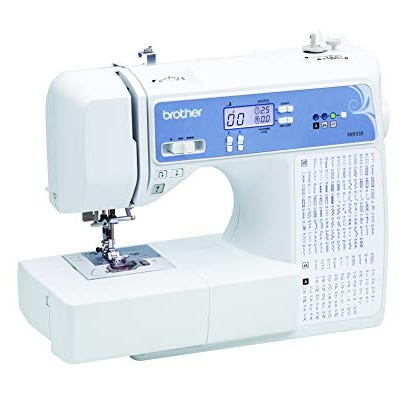
Brother XR9550 Sewing and Quilting Machine
Pros
- Handled variety of fabrics with ease
- Speed control
- Clear, easy to use controls
Cons
- Always use the spool cap
| Machine type | Computerized |
|---|---|
| Weight | 10.14 pounds |
| Built-in stitches | 110 utility stitches, 55 alphanumeric stitches and 8 buttonholes |
| Bobbin type | Drop-in |
7. Best Beginner Sewing Machine For Embroidery
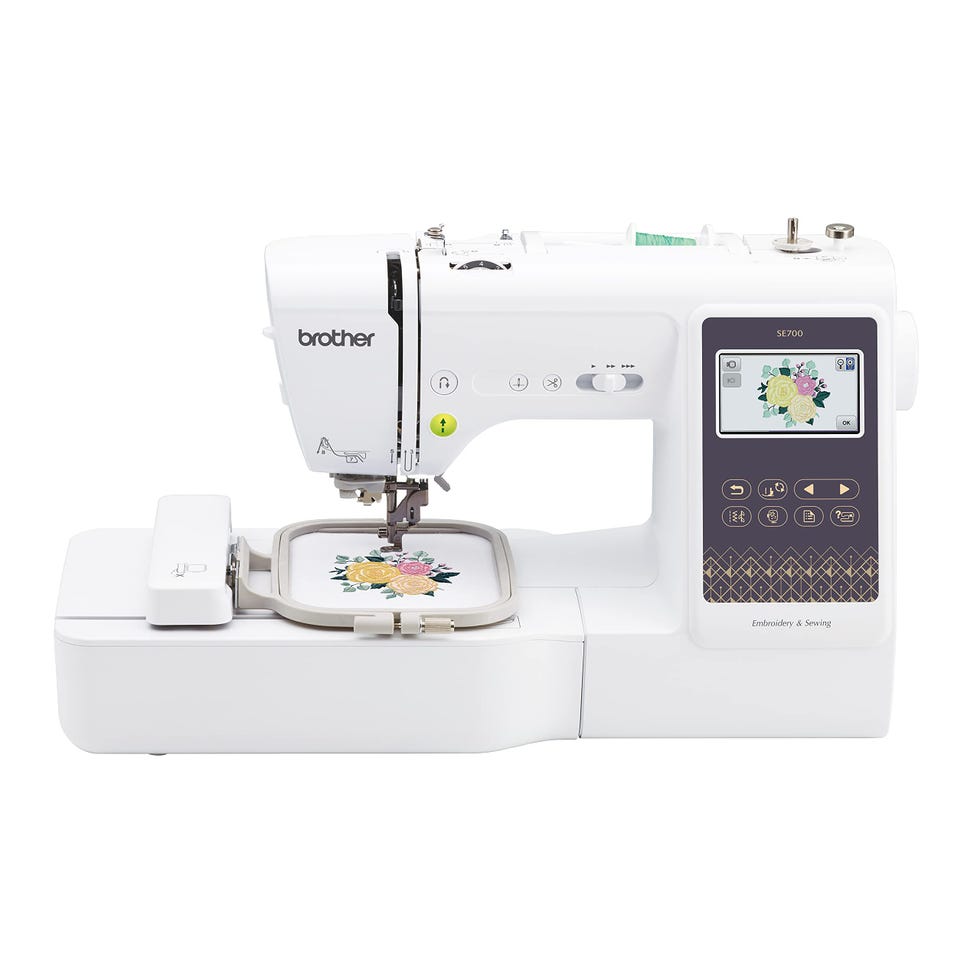
Brother SE700 Sewing and Embroidery Machine
 Now 10% Off
Pros
- LED-lit work area
- Easy to follow guides online
- Wireless design upload capabilities
Cons
- Smaller embroidery area compared to pricier models
Sewing and embroidery machines can be expensive and complex, but the Brother SE700 stands out for being both affordable and user-friendly. It offers a 4″ x 4″ embroidery field, complete with a loop, embroidery arm, and foot, allowing you to view designs in full color on the LCD display. This makes adjusting details like thread color a breeze.
With 135 built-in embroidery designs, the SE700 also supports wireless connectivity and includes a USB port to upload custom designs, as well as thousands of options from Brother’s online library. This machine doubles as a fully functioning sewing machine when the embroidery arm is removed. Additional features like an automatic needle threader, LED-lit work area, free arm, and drop-in bobbin make it a great choice for those looking for ease of use and versatility in one affordable package.
| Machine type | Computerized |
|---|---|
| Weight | 15.06 pounds |
| Number of stitches | 103 built-in stitches |
| Bobbin type | Drop-in |
8.Best Beginner Sewing Machine for Kids
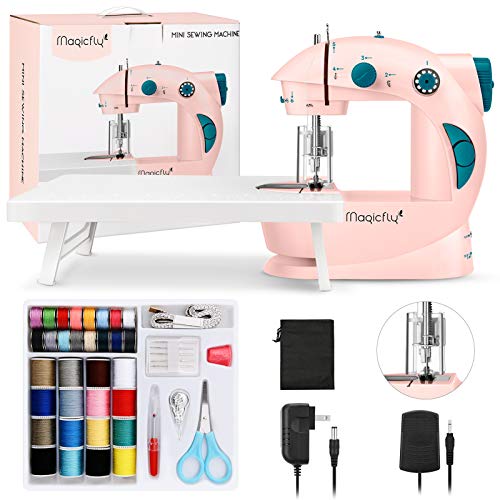
Magicfly Mini Sewing Machine for Beginners
Credit: Magicfly
Pros
- Finger guard for safety
- Includes threads, bobbins and other sewing accessories
- Over 13,000 Amazon reviews
Cons
- Not designed to last long-term
- No back stitch
When teaching young children to sew, safety is the top priority, and this Magicfly sewing machine is designed with that in mind. It includes a finger guard to help prevent injuries, making it a great choice for beginners. Lightweight and portable, it’s perfect for small hands and easy to move around — and all for under $50!
The machine offers slow-speed options, allowing children to sew at a comfortable pace, and comes with a variety of accessories to make learning easier. While it lacks a backstitch function, we recommend stitching over the ends twice to prevent unraveling. This machine is an affordable and safe way to introduce kids to the world of sewing.
| Machine type | Mechanical |
|---|---|
| Weight | 2.2 pounds |
| Built-in stitches | 1 stitch |
| Bobbin type | Drop-in |
9. Best Heavy Duty Sewing Machine for Beginners
Singer 4452 Heavy Duty Sewing Machine

Pros
- Designed specifically for denim and leather
- 1,100 stitches per minute
- Powerful motor
Cons
- Only use plastic Singer bobbins, according to reviewers
A trusted classic, the Singer Heavy Duty 4423 sewing machine is known for its ability to handle heavy fabrics like denim and leather with ease. Equipped with a powerful motor, it can stitch up to 1,100 stitches per minute, allowing you to complete projects quickly. The motor is strong enough to handle thick seams without issue, making it ideal for heavy-duty sewing tasks.
This machine offers 32 built-in stitches and multiple buttonhole options, providing plenty of variety without being overwhelming for users. Reviewers recommend using only Singer’s plastic bobbins to ensure optimal performance and avoid any potential issues. Whether you’re working on tough fabrics or everyday sewing projects, the Singer 4423 is a reliable and efficient choice.
| Machine type | Mechanical |
|---|---|
| Weight | 15.7 pounds |
| Built-in stitches | 32 stitches with 1 buttonhole option |
| Bobbin type | Front-loading |
How we researched these sewing machines

For this 2026 update, we reviewed current manufacturer specifications, manuals, included accessories and the features that matter most to a first-time sewer. We do not present manufacturer claims or third-party lab results as our own hands-on testing. We compare machines using the following practical criteria:
What to look for when buying a beginner sewing machine

In addition to sewing machine type, you’ll want to look out for the following features:
✔️ Number of built-in stitches: When first learning to sew, you really only need two stitches: straight and zig zag. But as you advance, you will want more stitch options and decorative stitches.
✔️ Size and weight: If you plan on bringing your sewing machine to classes or sewing groups, make sure you pick a portable option. Look for a lightweight sewing machine with a handle for easy toting.
✔️ Ease of use: For your first sewing machine, simple is better. Beginner sewing machines should still have a durable, metal frame and helpful tools, but avoid machines with features you won’t use. These can just get in the way and make it a more challenging machine to master.
✔️ Included accessories: Most machines include a bobbin and a presser foot, but some include much more. While you may not need a ton of accessories as a beginner, look for machines with clear manuals, extra presser feet and included repair tools.
As with all sewing machines, make sure to read the included or online manual carefully before starting, as every machine has slightly different use and care instructions.
What are the different types of at-home sewing and crafting machines?

When you start your sewing journey, the different machine types can feel overwhelming. The useful distinction is what each machine is designed to do and whether that matches the projects you expect to make.
✔️Mechanical sewing machine: Mechanical styles are more streamlined, with simple controls and buttons. If you are totally new to sewing, a mechanical machine is a great place to start because they are easier to understand and are more affordable.
✔️Computerized sewing machine: With greater stitch variety, fancier features and an LCD or touchscreen, computerized machines are great for beginners who hope to eventually advance to larger projects.
✔️ Embroidery machines: Some embroidery machines are embroidery-only, while combination models can handle both standard sewing and embroidery. If embroidery is a priority, compare hoop size, design transfer options and sewing features before choosing a combo machine.
✔️ Sergers: A serger, or overlocker, is normally used alongside a sewing machine. It forms an overlock stitch with multiple threads and trims the fabric edge as it sews, making it useful for clean garment seams and stretch fabrics.
✔️ Coverstitch machines: These are also not sewing machines and are for the purpose of finishing raw edges and adding decorative stitches, like a serger. These machines use multiple needles to make a double row of stitches and they don’t feature a blade like a serger.
A guide to sewing machine accessories and features

Sewing machines can include a ton of different features, but more features and accessories doesn’t necessarily mean better. Here is a guide to sewing machine features you may come across when sewing machine shopping:
✔️Back stitch: When you are sewing, you need to back stitch at the end to prevent the seam from coming undone. Very basic, simple sewing machines that are under $50 don’t generally offer back stitch. Therefore, you’ll have to sew over your stitches twice to keep them in place.
✔️Thread cutter: Most sewing machines feature a small blade on the side of the machine, so you can easily cut the fabric after sewing. Higher-end machines may feature automatic thread cutting, where the machine will snip the thread close to the fabric.
✔️Automatic buttonhole function: As a stitch option, you may see automatic buttonhole options. When you use an automatic buttonhole stitch, make sure you use the buttonhole presser foot.
✔️Extension table: An extension table clicks into place on your machine to offer more support and stability for larger sewing projects like quilts. You can also purchase these separately if not included.
✔️Automatic needle threader: An automatic needle threader is a small tool built into a sewing machine that helps push the thread through the needle. Some sewers find this tool very helpful and convenient while others never use it — it comes down to personal preference.
✔️Speed control: When sewing, you control the sewing speed by the pressure you apply to the foot pedal. Some machines offer speed control where you can limit how fast the machine will sew. This is great for newbies to prevent going too fast and losing control.
✔️Drop-in bobbin: Sewing machines either feature a drop-in bobbin or a front-loading bobbin. Drop-in bobbins go into the machine right under the needle without a bobbin holder. Front-loading bobbins are more traditional and have a bobbin holder that goes in the front of the machine. Beginners tend to find drop-in bobbins a bit easier to master and faster to thread.
✔️Needle up/down: On the side of a sewing machine, there’s a hand wheel that controls the needle, so you can turn the wheel to lift the needle. On higher-end machines, there may be a needle up/down button which lifts the needle with the push of a button without having to use a hand wheel.
Most top-tier brands like Brother and Singer release new models every few years. The current 2025/2026 lineup features excellent stability and “Smart” features like improved LED lighting and drop-in bobbins, so it’s a perfect time to buy without fear of the tech becoming obsolete quickly.
Look for Speed Control and Start/Stop buttons. As you move into 2026, these features are becoming standard because they allow beginners to sew without using a foot pedal, which provides much better control for intricate projects.
Yes! Modern beginner machines are being tested more frequently with sustainable materials like heavy linen, hemp, and recycled blends. If you plan to work with thicker sustainable fabrics, ensure your machine has a “High Presser Foot Lifter.”
For basic sewing and garment making, you don’t need it. However, if you’re interested in Embroidery, many 2026 models now connect to mobile apps (like Brother’s Artspira) to download patterns instantly.
A quality entry-level machine from this list should easily last 5 to 10 years with regular oiling and maintenance. Investing in a reputable brand now ensures you’ll still be sewing smoothly through 2030!