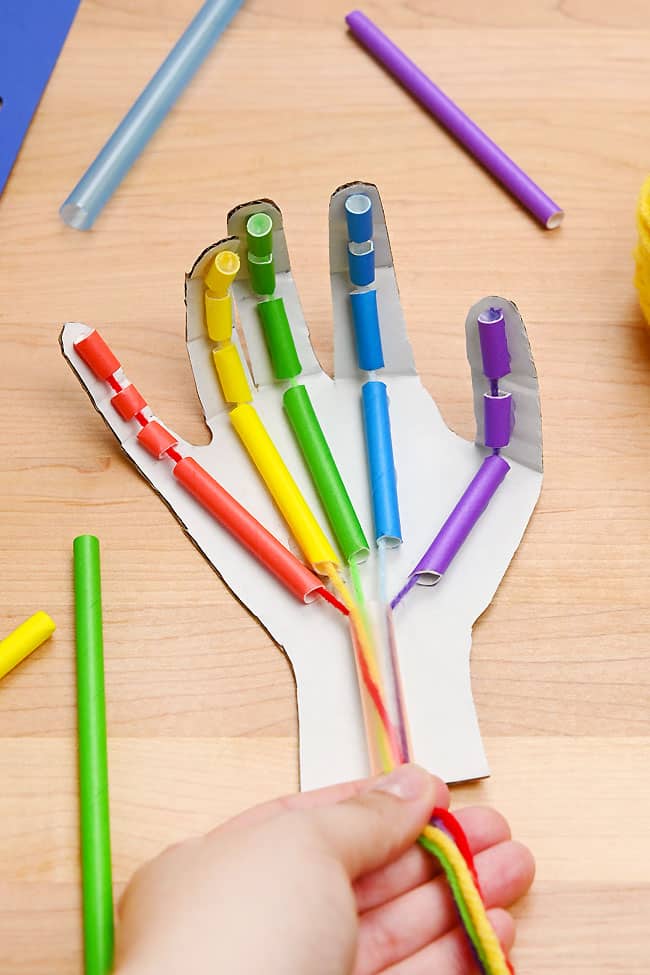
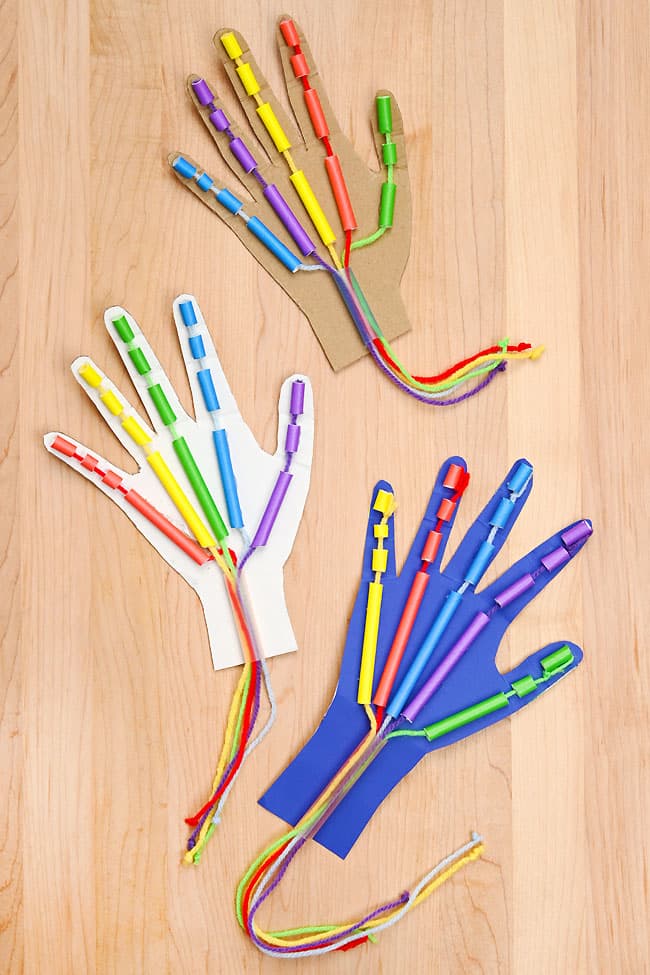
Build your very own robot hand with just a few simple supplies — and watch it move like magic! This colourful cardboard hand is more than just a cool toy — it’s a hands-on STEM activity that shows how real fingers work, using string “tendons” and bendable “joints”.
Whether your kids are acting out stories about robots or exploring how muscles and bones function, this craft is full of creative possibilities. It’s cool to make, fun to play with, and a great way to sneak a little science into craft time!
How to Make a Robot Hand
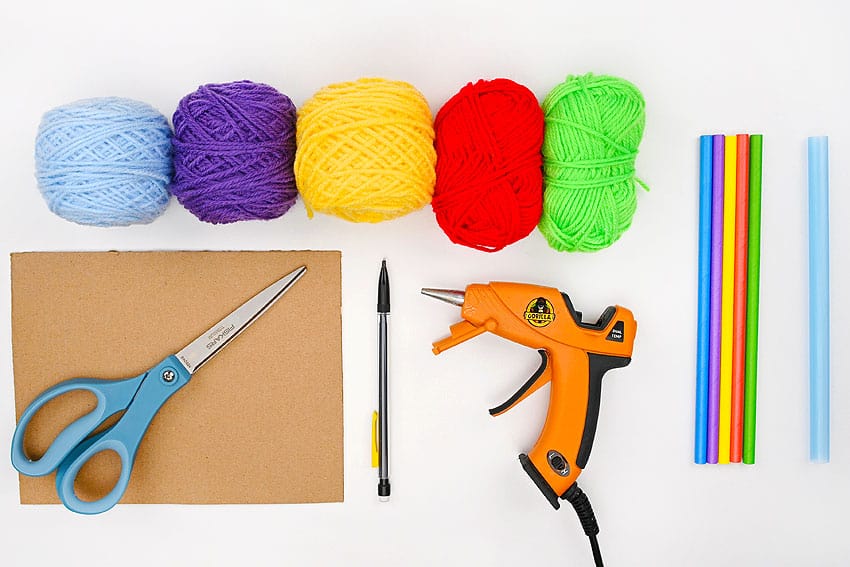
Materials:
- Cardboard
- Drinking straws(paper or plastic; 5 colours)
- Smoothie straw
- Yarn(5 colours to match straws)
Equipment:
-
Paper clip(s)(or yarn needle)
Instructions:
Step 1: Find what you need
-
Gather your supplies and materials.
Step 2: Trace your hand and mark the joints
-
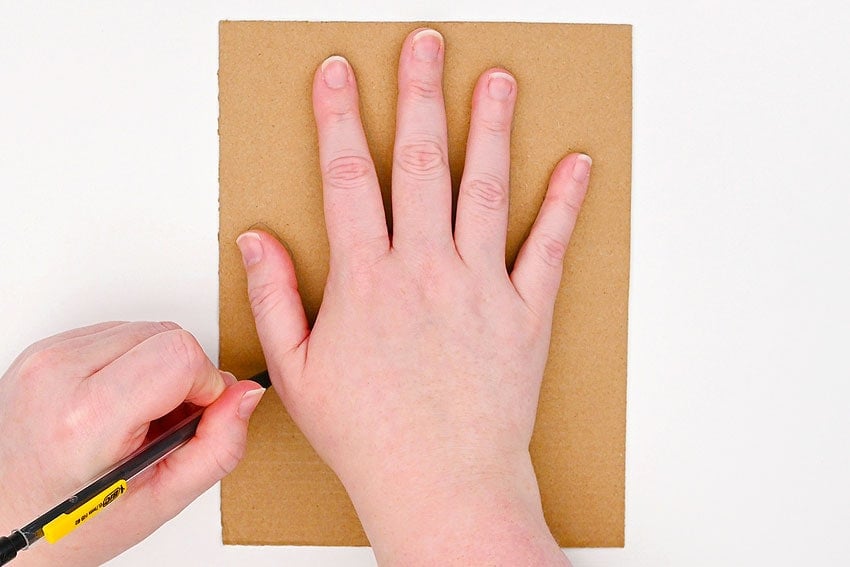
Trace your hand onto cardboard. A larger, adult-sized hand actually works better for this craft. Try to include the first part of the wrist as well.
-
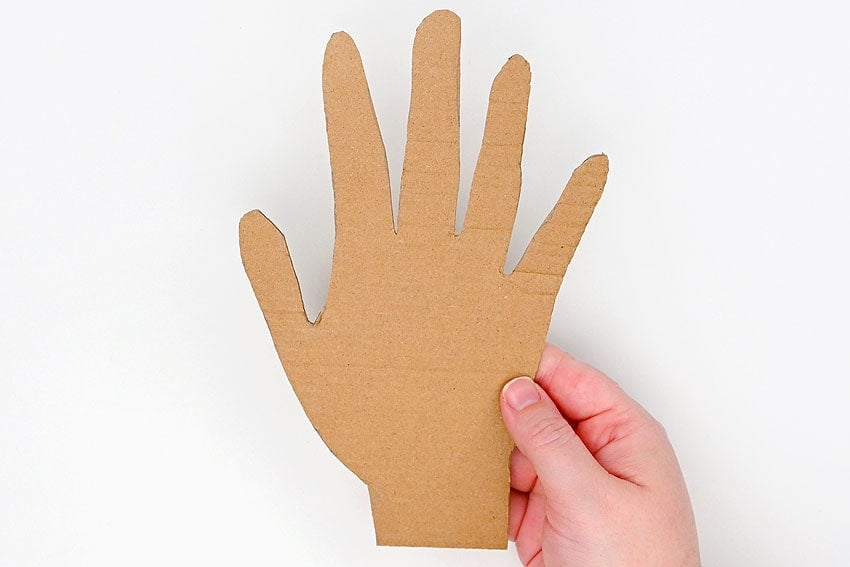
Cut out the cardboard hand.
-
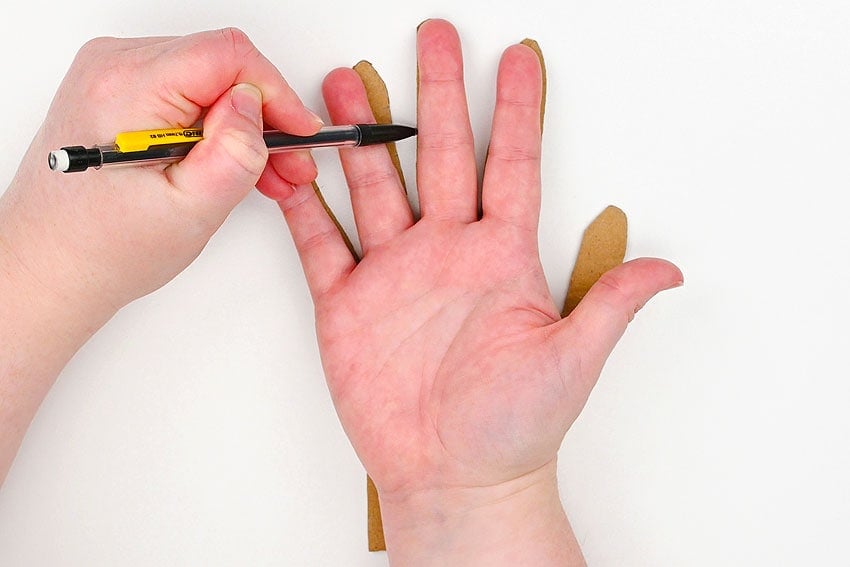
Flip the hand over. We’ll be working on the inside of the hand. (So for the right hand, the thumb should be on the right.)Place your hand upside-down on the cut-out and mark where the knuckles and joints are (3 on each finger and 2 on the thumb).
-
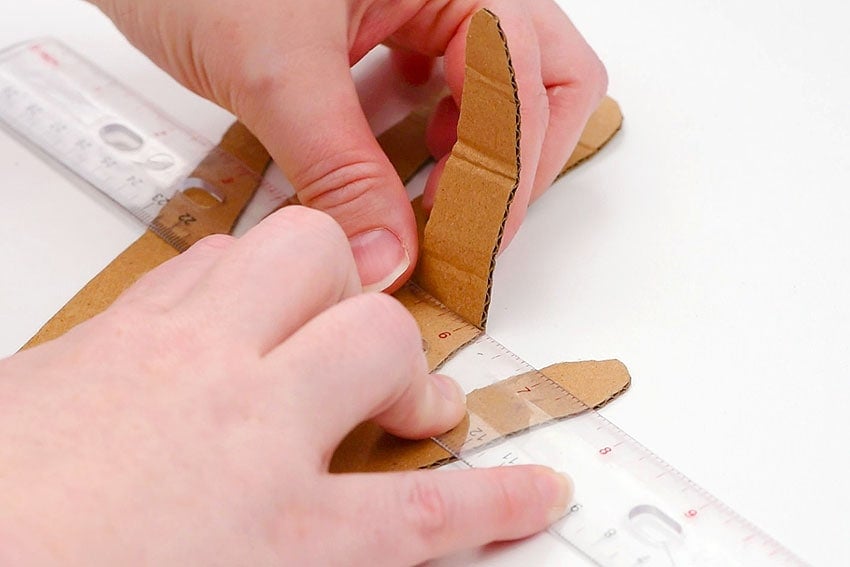
Set a ruler on the marked spots and fold the finger joints down. This helps to create clean folds.
Step 3: Attach straw sections to the hand
-
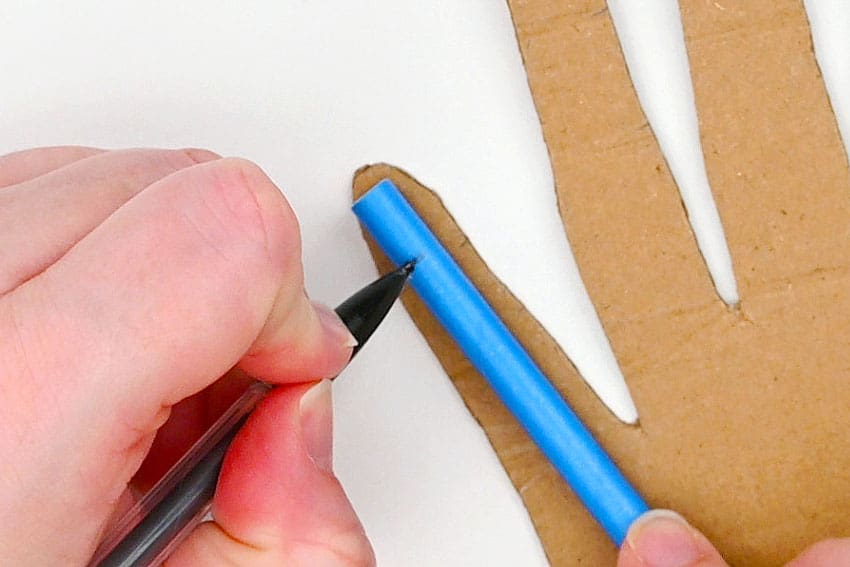
Place a straw on the first finger, setting the top near the edge of the finger.Make a mark on the straw with pencil a little bit above the first joint of the finger.
-
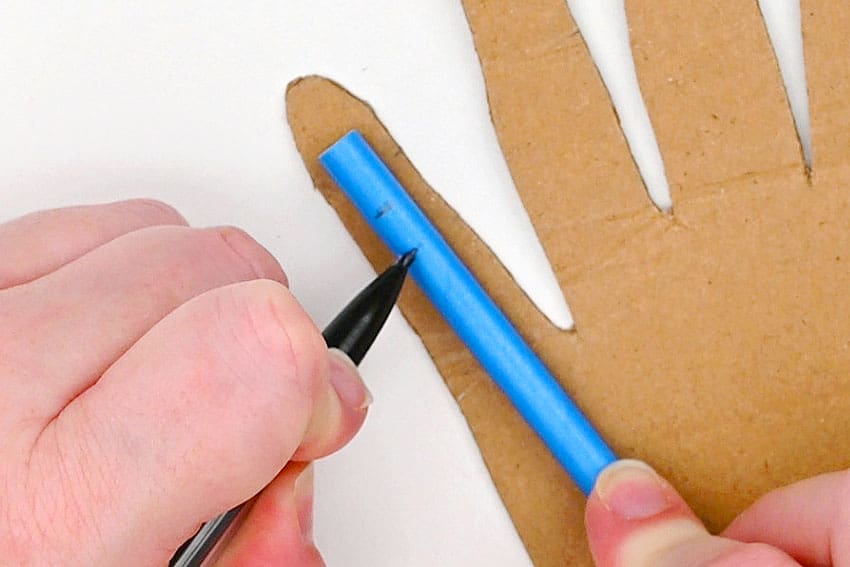
Then move the straw down so the marked line is a bit below the first joint.Draw another mark for the next joint, again making it a bit above the marked line.
-
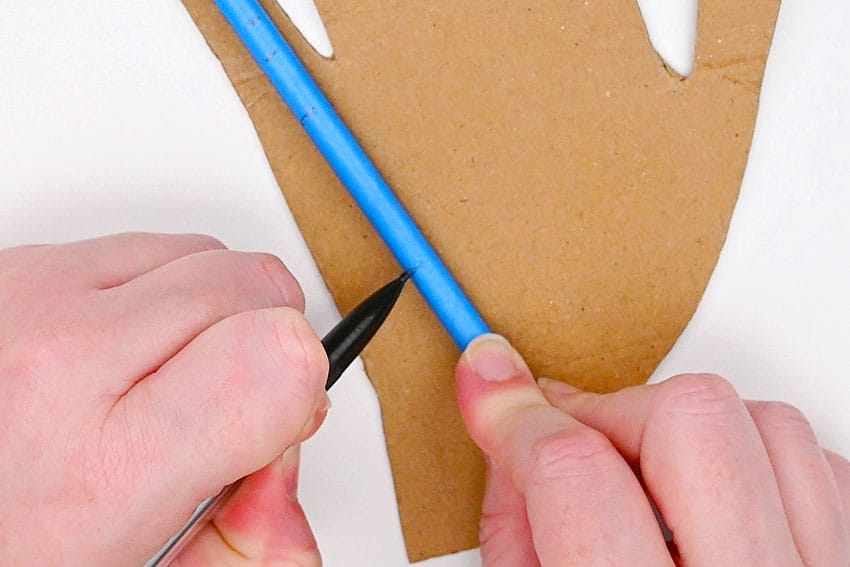
Repeat for the third joint of the finger, and then mark a longer section that will go below the finger down to the bottom of the hand on an angle.
-
Cut out the sections of the straw and attach them to their respective sections using hot glue.Try to glue them at the same angle, so they look like a straight line with spaces in-between.
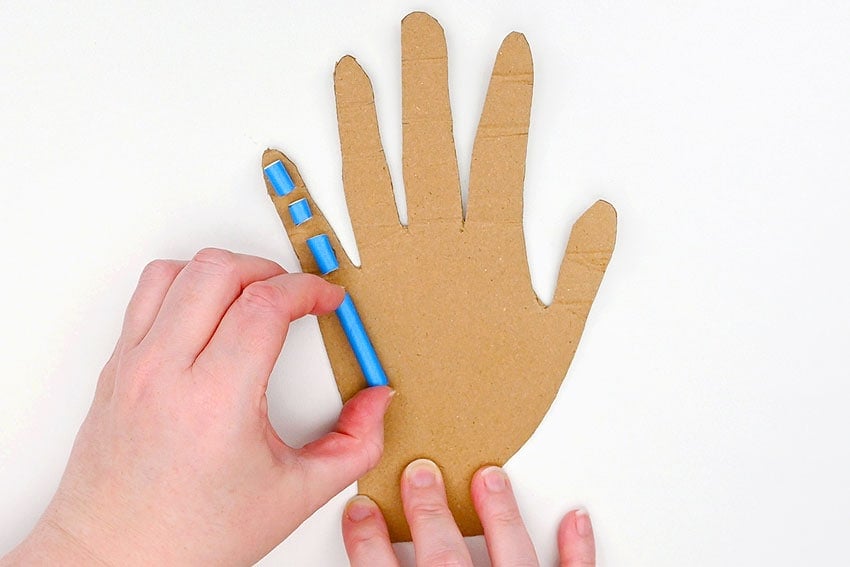
-
Repeat for the rest of the hand, using a different colour of straw for each finger.
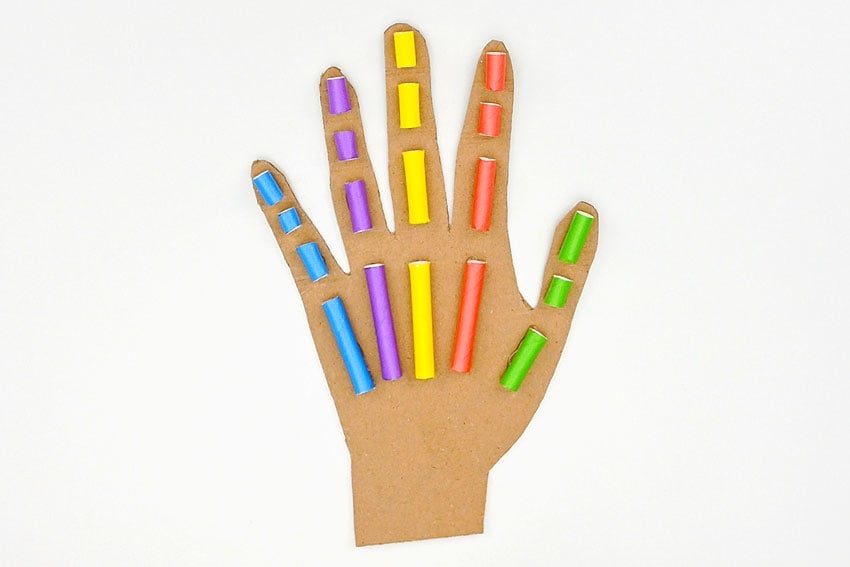
-
Cut a section of a larger smoothie straw to fit on the wrist. Glue it in place in the center.
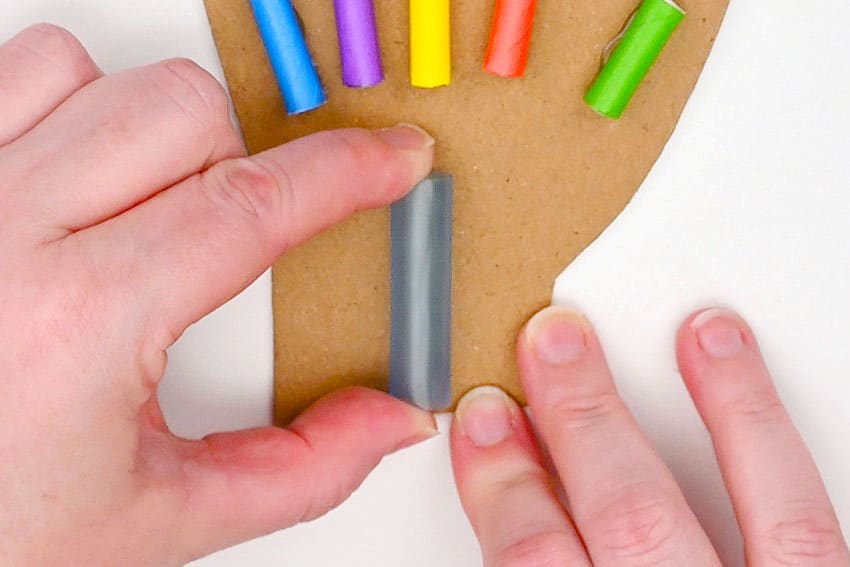
Step 4: Add yarn through the straws
-
Unfold a paper clip so that there’s only one curved section. This is optional, but it will act like a “needle” to thread yarn through the straws. It makes it a lot easier!
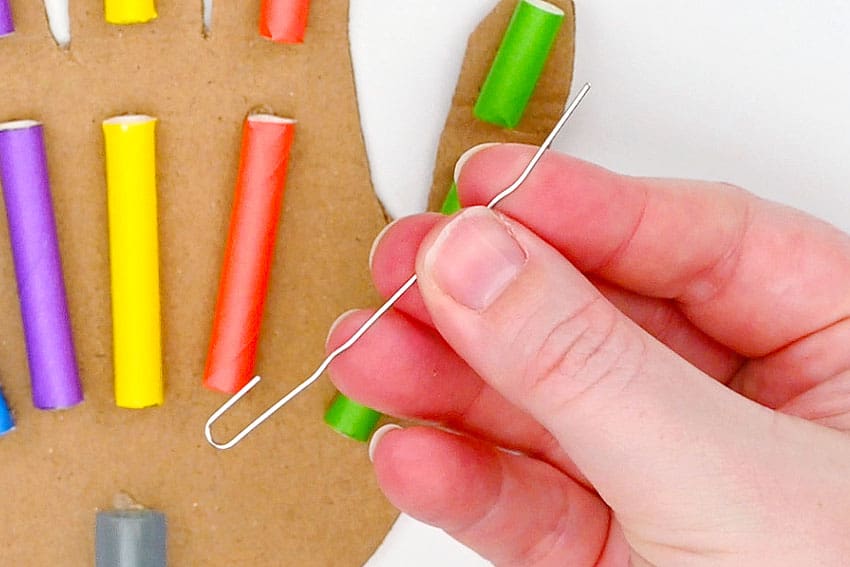
-
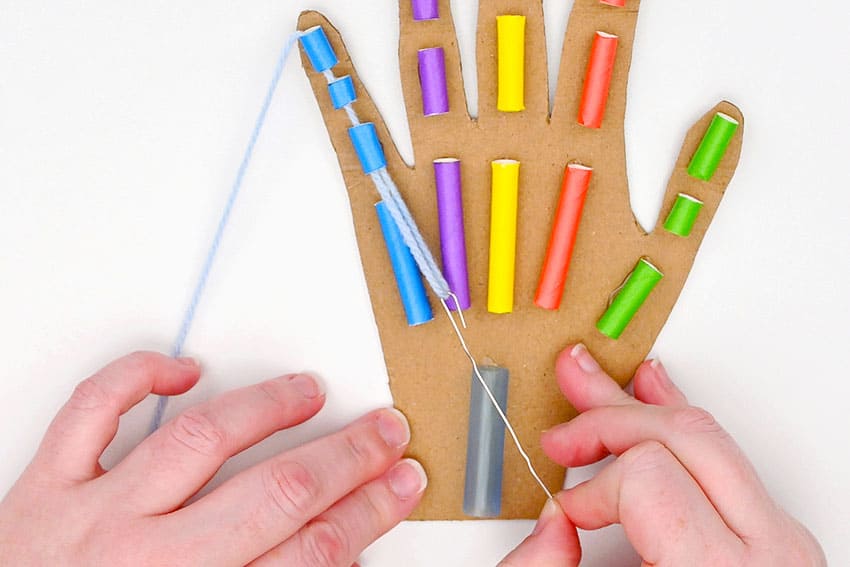
Choose a colour of yarn to match your colour of straw. Keep it attached to the ball and use the “needle” to pull the yarn down through the top sections of straw.
-
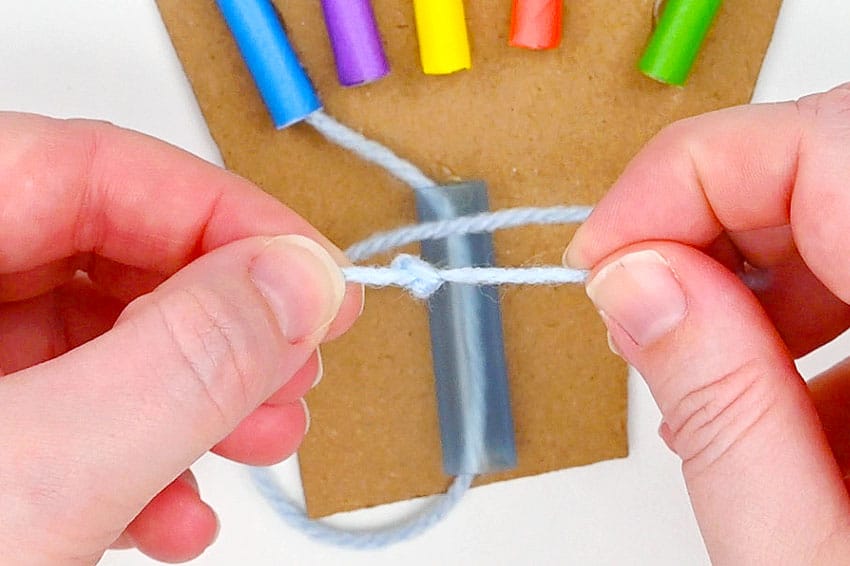
Next, bring the yarn through the longer straw section and the smoothie straw as well. Tie a knot in the bottom of the yarn.
-
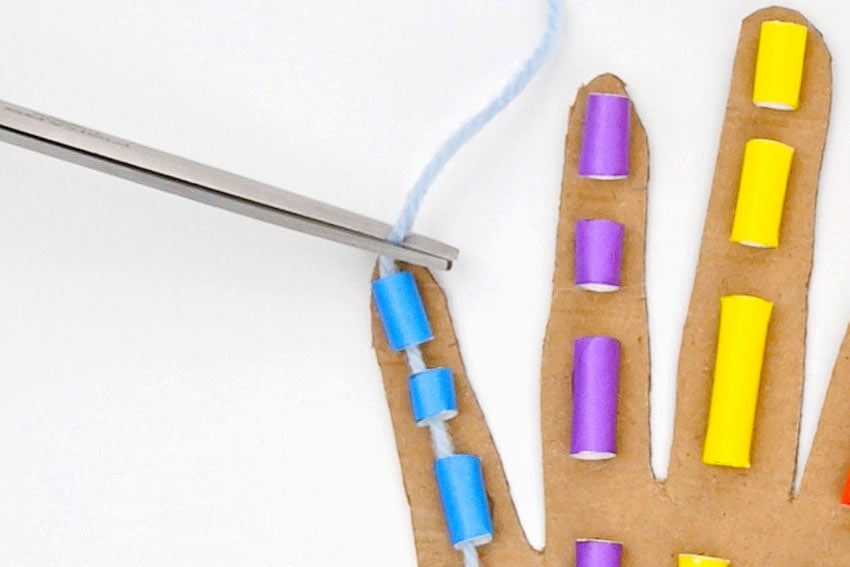
Pull the yarn straight, so that the knot’s about 3 inches below the smoothie straw. Then cut off the yarn by the top straw.
-
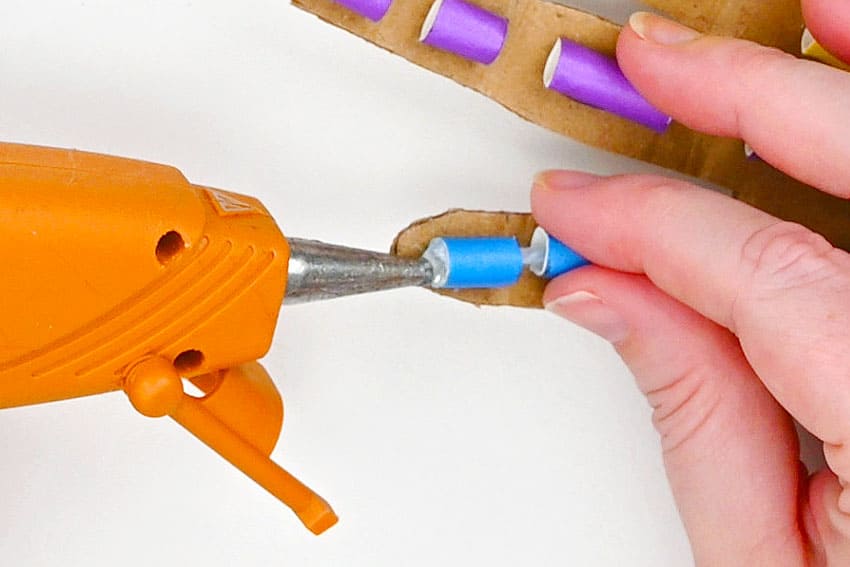
Add a generous amount of hot glue into the top straw section. Make sure the yarn stays in place (you can push it down with the paper clip or pencil, if needed), and allow the glue to cool.
-
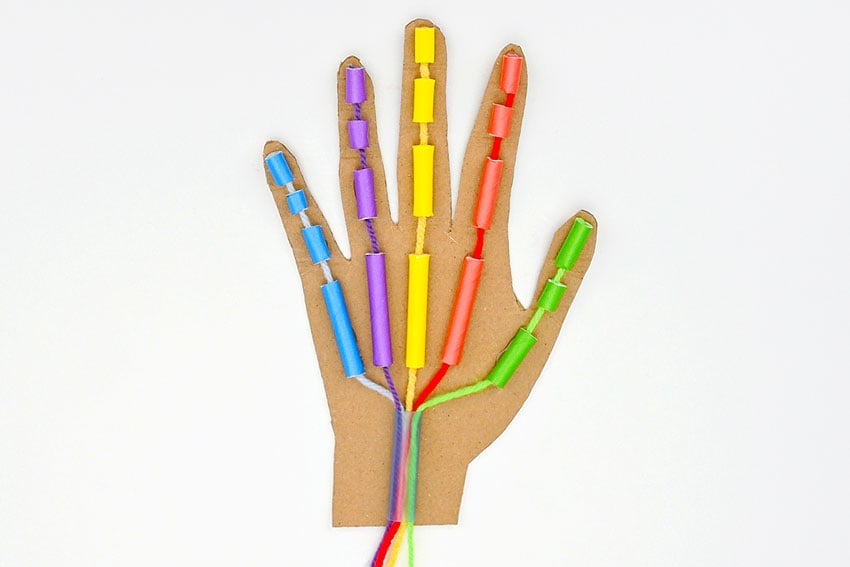
Repeat, adding different colours of yarn to each finger to match the straw colour.The colour matching is optional, of course, but it easily allows you to identify which finger you’ll be moving!
-
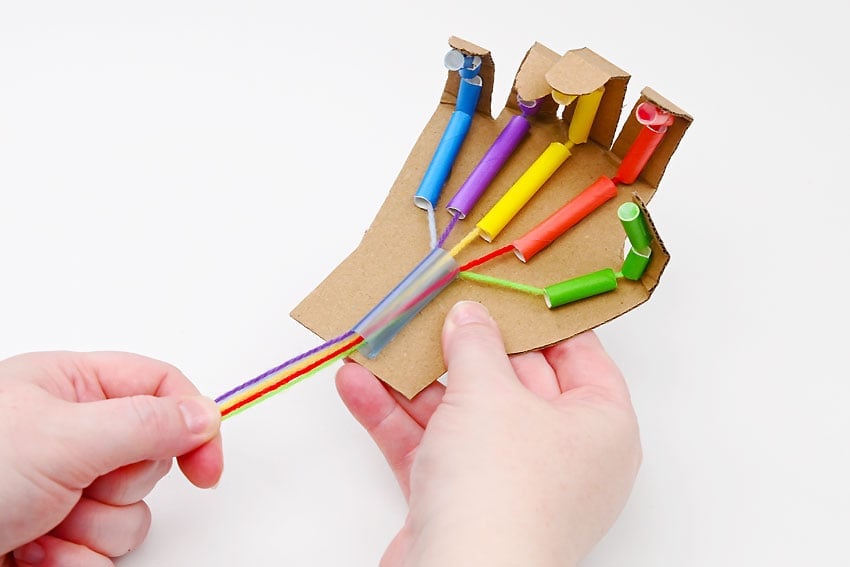
Your robot hand is complete! Now have fun pulling the strings down to move the fingers.
Helpful Tips:
-
Flip your hand shape before adding straws: If you’d like your robot to have a right or left hand, flip the cardboard hand properly before attaching the straws. It’s not essential, though — your robotic hand will work just fine no matter which way it’s facing!
-
Want to control the hand with your own fingers? You can tie the bottom of the yarn pieces around your fingers to “wear” the robot hand and make it move more like a glove. Just cut the yarn a little longer to make this easier.
How does this robot hand move like a real hand?
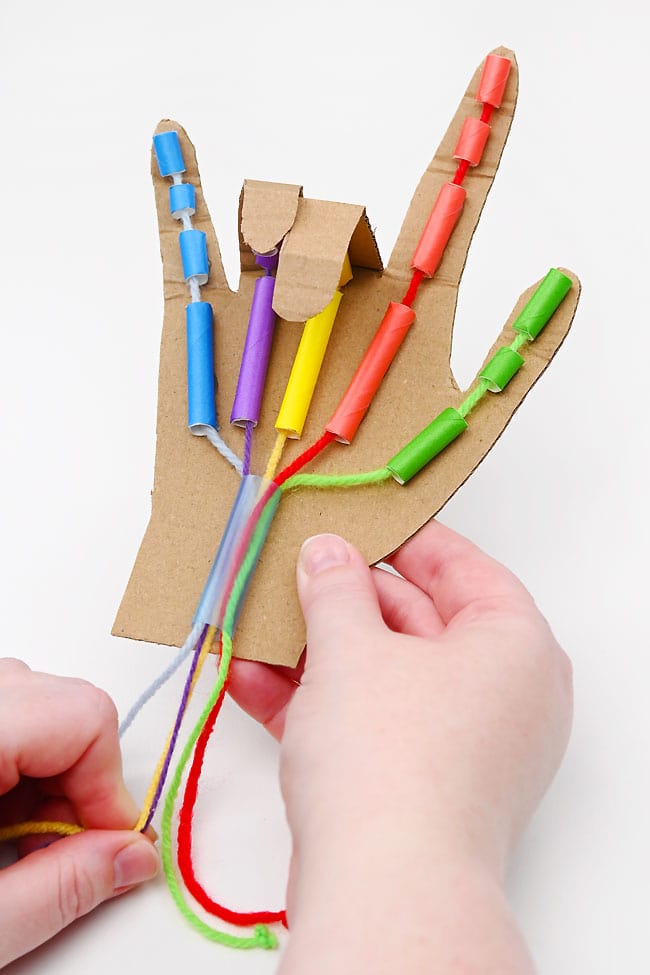
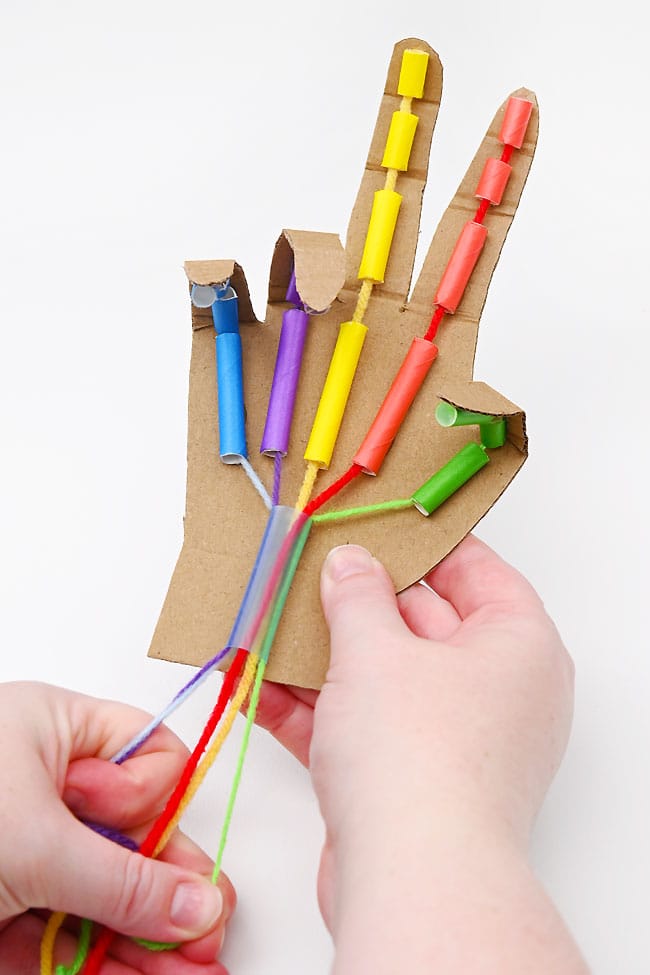
The yarn in this craft acts like tendons — the parts in our body that help pull our fingers when we move them. When you pull on the strings, the fingers bend because the straw pieces work like joints, just like our knuckles. It’s not exactly like a real hand (the thumb doesn’t move in the same way), but it’s a fun way to learn the basics of how hands work!
What kind of paper or cardboard works best for the robotic hand?
We tested a few materials: cardstock, thin cereal box cardboard, and thick cardboard from packaging or delivery boxes.
The thicker cardboard works the best — it holds its shape, lets the joints move easily, and helps the fingers bounce back up instead of flopping downward.
What type of straws should I use on this robot toy hand?
We used colourful paper straws, but plastic ones work great too — especially the straight (non-bendy) kind, since you can cut longer sections.
You’ll also need a large straw (like a smoothie or boba straw) to hold all 5 yarn pieces at the wrist. Ours was plastic, but you can find wide paper straws as well.
Do I need 5 colours of yarn and straws to make a robot hand?
Not at all! You can use any colours you have — even if they’re all the same colour. But we found that matching the straw and yarn colours made it easier to tell which string moves which finger. It definitely made the project more fun!
Is hot glue the only choice for making this robotic hand project?
Hot glue is the easiest and strongest option — it dries quickly and holds the straws firmly in place. Tacky glue works too, but you’ll need to let it dry for a while.
You can also tape the straws down, but it doesn’t hold as well and definitely doesn’t look quite as cool. If you want to try tape, go with extra-strong craft tape or mounting tape for better results.
We tested glue dots, glue tape, and regular double-sided tape and none of them held up well. The straw sections came right up off the cardboard hand when we pulled on the yarn.
This robot hand craft is such a fun way to combine play and learning! Kids get to build a moving model, act out robot adventures, and discover how their own hands work in the process. It’s a simple project, but it introduces big ideas like joints, tendons, and basic mechanics in a way that’s easy to understand and is exciting to explore.
Whether you’re using this STEM project for a classroom science unit or just enjoying a craft at home, this robotic hand is a fantastic way to spark curiosity and creativity.
Here’s even more STEM craft ideas: